
If you move goods worth more than ₹50,000, you probably need an e-way bill. It sounds technical, but the idea is simple. This guide explains what an e-way bill is, the limit, when you need one, how long it lasts, and how to generate it — in plain language for Indian businesses.
What is an e-way bill?
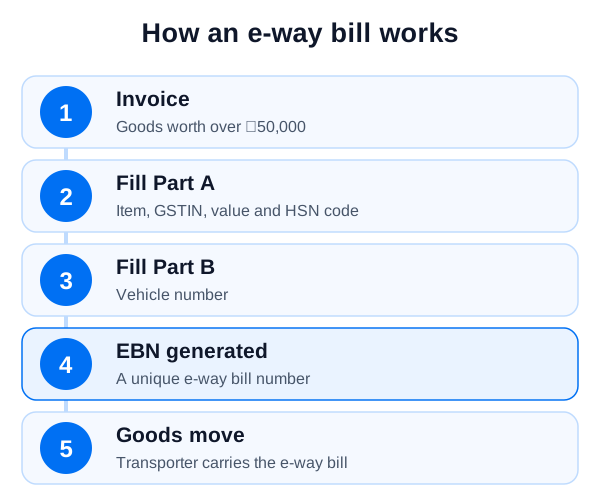
An e-way bill (Electronic Way Bill) is a document required for the movement of goods from one place to another under GST. It’s generated on the government e-way bill portal, and each one gets a unique E-Way Bill Number (EBN) that the transporter carries during transit.
Think of it as a digital pass for your goods — it links the shipment to your invoice so the movement is recorded and taxed correctly.
When do you need an e-way bill? (the ₹50,000 limit)
The main trigger is consignment value:
| Situation | E-way bill needed? |
|---|---|
| Consignment value more than ₹50,000 | Yes (generally) |
| Consignment value ₹50,000 or less | Usually no |
| Inter-state movement above ₹50,000 | Yes |
| Intra-state movement | Yes, but the threshold can vary by state |
Note: ₹50,000 is the common threshold, especially for inter-state movement. For movement within a state, some states set a different limit (for example a higher threshold). Always confirm the rule for your own state.
What’s inside an e-way bill?
An e-way bill has two parts:
| Part | What it covers | Who usually fills it |
|---|---|---|
| Part A | Invoice details — GSTIN, delivery pincode, invoice number, value, HSN code, reason for transport | Supplier or recipient |
| Part B | Transport details — vehicle number or transporter ID | Supplier or transporter |
The e-way bill is only complete — and its validity only starts — once Part B is filled in.
Who generates it?
The registered person causing the movement generates the e-way bill — that’s usually the supplier or the recipient. If neither does, the transporter can generate it before moving the goods. In practice, the seller most often raises it along with the invoice.
How long is an e-way bill valid?
Validity depends on the distance the goods travel:
| Distance | Validity |
|---|---|
| Up to 200 km | 1 day |
| Each additional 200 km (or part) | +1 day |
The validity clock starts when Part B is entered. If goods can’t reach in time (a breakdown, for example), the e-way bill can be extended within the allowed window.
When you don’t need an e-way bill
You generally don’t need one when:
- The consignment value is below the threshold.
- The goods are GST-exempt or on the specified exemption list.
- Goods are moved by non-motorised transport (e.g. a handcart).
- The movement is a short, specified local transfer.
The exact exemption list is defined by the rules, so confirm before you skip generating one.
A recent update to know about (2026)
Recent changes have tightened e-way bill generation — notably, e-way bills cannot be generated against very old base documents (invoices beyond a set number of days). If you bill and dispatch promptly, this won’t affect you — but don’t sit on old invoices expecting to raise an e-way bill much later. Check the current rule for the exact limit.
How to generate an e-way bill
You have two options:
- The e-way bill portal — enter the invoice and transport details manually.
- Billing software — the faster way. In KhataBuddy, you can generate the e-way bill directly from the invoice, without re-typing everything on the portal.
E-way bills matter most for wholesale & distribution and manufacturing businesses that move goods regularly. Try KhataBuddy free to raise invoices and e-way bills from one place.