
Gold is taxed differently from most goods, and jewellers field the same question at the counter every day: how much GST goes on a gold bill? The short answer is 3% on the gold, plus 5% on the making charges. This guide explains how the two rates combine, the rates for silver and diamonds, the HSN codes, and how old-gold exchange is handled.
GST rate on gold
Gold is taxed at 3% GST on its value — well below the standard 18% rate, reflecting its status as a high-value store of wealth. This 3% applies to:
- Gold coins and bars,
- Gold jewellery (on the metal value), and
- Silver and silver jewellery too.
Under GST 2.0, this special 3% rate for gold and silver was retained.
Making charges: the 5% part
Here’s the part that trips people up. When you buy jewellery, you’re really paying for two things: the gold and the craftsmanship (making charges). They’re taxed at different rates:
- Gold value → 3%
- Making charges → 5% (taxed as a service, when shown separately)
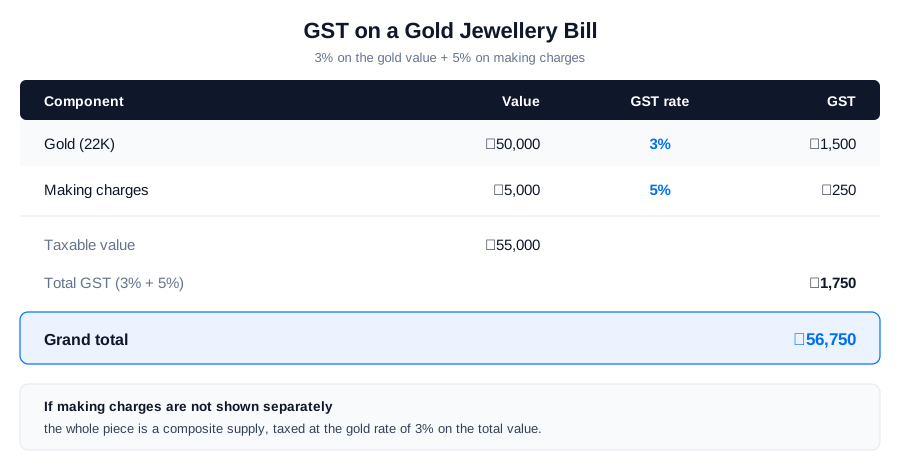
So on a piece with ₹50,000 of gold and ₹5,000 making charges:
| Component | Value | GST rate | GST |
|---|---|---|---|
| Gold (22K) | ₹50,000 | 3% | ₹1,500 |
| Making charges | ₹5,000 | 5% | ₹250 |
| Total | ₹55,000 | — | ₹1,750 |
The customer pays ₹56,750.
What if making charges aren’t shown separately?
Many jewellers quote a single price without breaking out making charges. In that case the sale is a composite supply — the gold is the principal supply — so the whole value is taxed at 3%. On the same ₹55,000, that’s ₹1,650 GST. Whether to itemise making charges or bundle them is a billing choice, but it changes the tax, so be consistent.
Silver, diamonds and studded jewellery
| Item | GST rate |
|---|---|
| Gold (value) | 3% |
| Silver and silver jewellery | 3% |
| Making charges (shown separately) | 5% |
| Rough diamonds | 0.25% |
| Diamond-studded gold jewellery | 3% (on the jewellery value) |
These are the widely-applied rates — confirm the exact rate for your specific item with the HSN Code Finder, since classifications can change by notification.
HSN codes for gold
| Item | HSN heading |
|---|---|
| Gold — unwrought / semi-manufactured | 7108 |
| Articles of gold jewellery | 7113 |
| Silver | 7106 |
| Diamonds | 7102 |
What about old-gold exchange?
Exchanging old jewellery for new is common in India. The general position:
- GST at 3% applies on the full value of the new jewellery you’re selling.
- When an individual customer hands over old gold as part-payment, that old gold is generally not taxed again under reverse charge.
The treatment can get nuanced (for example, when old gold is bought from another dealer), so confirm the current rule for your exact situation before billing.
Billing gold correctly
A jewellery bill has moving parts most software gets wrong — billing by weight, the day’s gold rate, and the 3% + 5% split between metal and making. Doing that by hand invites errors.
In KhataBuddy, you can bill by weight with custom units, apply the correct 3% gold and 5% making-charge GST automatically, and generate a clean, compliant invoice you can share on WhatsApp. See how it works for jewellery businesses, or try KhataBuddy free.
Need a quick estimate? The GST Calculator works out the tax on any amount.