
A salary slip looks simple until you sit down to make one and wonder what actually has to be on it. This guide covers the standard salary slip format, what belongs in each section, and — for a small team — how short it can reasonably be.
Salary slips are now required for every employee
Worth knowing before anything else: Section 50 of the Code on Wages, 2019 requires every employer to issue a wage slip for each pay period, and that provision came into force on 21 November 2025.
Two things changed that small businesses often miss:
- The old salary ceiling was removed — the requirement covers all employees, not only those below a wage threshold.
- The slip may be issued electronically or on paper, so a PDF sent on WhatsApp counts.
Several state Shops and Establishments Acts separately require wage registers and slips, so in most places this was already expected. The Code simply makes it universal.
The four parts of a salary slip
Every salary slip, however simple, answers four questions in order: who and when, what was earned, what was taken off, and what was actually paid.
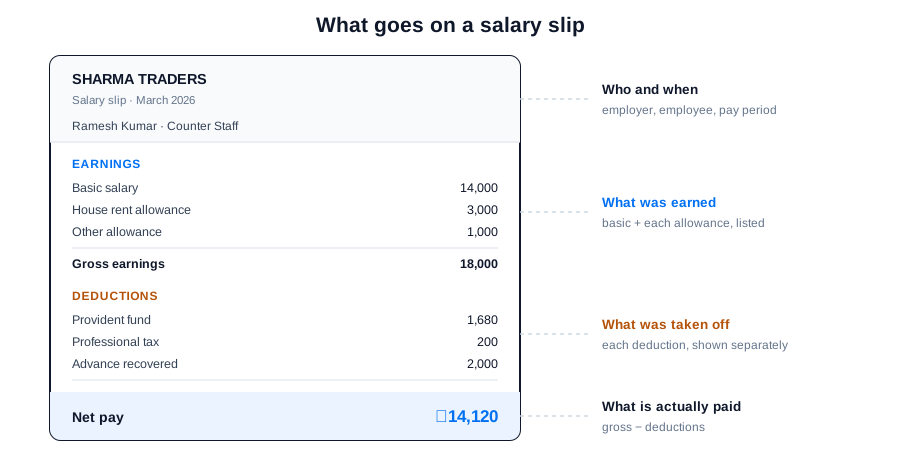
1. The header
Identifies who the slip is from, who it is for, and which period it covers:
- Employer’s name and address
- Employee’s name, designation and employee ID if you use one
- The pay period (the month) and the date of issue
2. Earnings
Everything the employee earned for that period, listed line by line:
| Component | What it is |
|---|---|
| Basic salary | The fixed core of the pay, before allowances |
| House rent allowance (HRA) | Paid towards rent |
| Dearness allowance (DA) | Cost-of-living component, common in some sectors |
| Conveyance / transport | Towards travel to work |
| Other allowances | Special allowance, meal, mobile and similar |
| Bonus or incentive | Where paid for that period |
Added together, these give gross earnings.
3. Deductions
Everything taken off, again listed separately so the employee can see each one:
| Deduction | What it is |
|---|---|
| Provident fund (PF) | Employee’s contribution, where applicable |
| ESI | Employee state insurance, where applicable |
| Professional tax | Levied by some states |
| Income tax (TDS) | Tax deducted at source, where applicable |
| Advance or loan | Recovery of an amount already paid out |
4. Net pay
The single number that matters most to the person receiving it:
Net pay = gross earnings − total deductions
This is the amount that actually reaches the employee’s hands or bank account.
A simple format is still a valid format
Most salary slip templates online are written for corporate payroll, with HRA splits, PF and TDS on every line. If you run a shop with four staff, none of that may apply — and you do not need to invent components that do not exist.
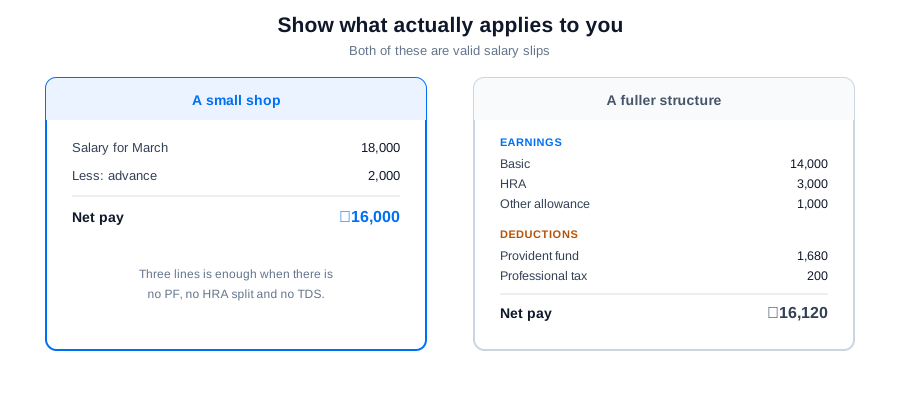
If you pay a fixed monthly amount and occasionally recover an advance, a slip with three lines does the job: what was agreed, what was deducted, what is being paid. It still identifies the employer, employee and month, and it still shows the arithmetic — which is what the requirement is actually about.
The rule of thumb: show what genuinely applies, and show each item separately. A slip that hides a deduction inside a net figure is the one that causes disputes.
Keep the records
Wage records should be kept for at least three years. Missing records tend to count against the employer during an inspection or a wage dispute, and reconstructing months of pay history after the fact is unpleasant work.
This is the practical argument for generating slips from a system rather than a spreadsheet folder: the history exists whether or not anyone remembers to file it.
Worth confirming: requirements under the labour codes and state rules can differ by state and by establishment type. Treat this as the general shape and confirm what applies to your business.
Making slips without rebuilding them each month
A spreadsheet works, but it has two irritations that compound. You rebuild the same layout every month, and once the salary is paid you enter the cost into your accounts a second time — so the biggest running expense in the business arrives late, or as one lump sum nobody can break down.
Staff attendance and payroll in KhataBuddy removes both. You mark attendance as the month goes, enter the figures you have agreed, and generate the slip — and because each staff member sits in your books as an expense head, the salary cost lands in your ledgers and reports at the same time, with nothing to re-enter.